Author Archive for Tyler Greenleaf – Page 2

Percussion Professor Russell Hartenberger becomes Dean in 2008 #tbt

Having recently joined Steve Reich and Musicians in 1971 and founding percussion ensemble Nexus in 1972, Russell Hartenberger wrapped up his Ethnomusicology PhD at Wesleyan University in Connecticut in 1974 and joined the Faculty of Music as percussion professor.

Russell Hartenberger performing on Clapping Music recording (1972) with composer Steve Reich:

Nexus was a fixture at U of T Music as an Ensemble in Residence and was highly influential in contemporary music circles, touring around the world for decades.
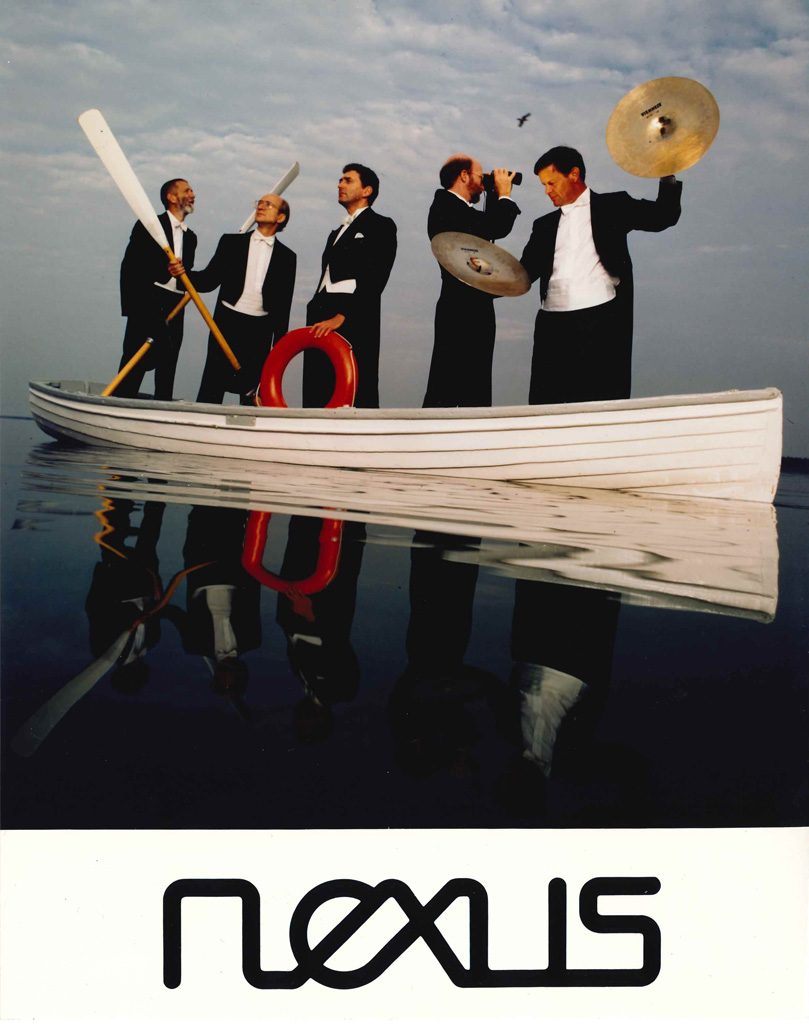
Nexus promotional photo (L-R: John Wyre, Russell Hartenberger, Bill Cahn, Bob Becker, Robin Engelman), photo by Doug Forster. Percussion Professor Russell Hartenberger went on to be Dean from 2007-2010.
Nexus promotional photo (L-R: John Wyre, Russell Hartenberger, Bill Cahn, Bob Becker, Robin Engelman), photo by Doug Forster.

Dr. Hartenberger is an extraordinary musician and teacher. From the Nexus website:

With Steve Reich and Musicians he recorded for ECM, DGG and Nonesuch Records, and performed on the Grammy Award winning recording of Music for 18 Musicians. With the Reich Ensemble, Russell toured throughout the world and performed with the New York Philharmonic, Israel Philharmonic, Cologne Radio Orchestra, London Symphony and Brooklyn Philharmonic. As a member of Nexus, Russell has performed with leading orchestras in North America, Europe and Asia. Along with members of Nexus, he created the sound track for the Academy Award-winning Full-Length Documentary, The Man Who Skied Down Everest. His awards include the Toronto Arts Award in 1989, Banff Centre for the Arts National Award in 1997, a Juno nomination in 2005, and was inducted into the Percussive Arts Society Hall of Fame in 1999. He was presented with the Leonardo da Vinci World Award of Arts by the World Cultural Council at Leiden University, the Netherlands in November of 2017.


Students of Prof Hartenberger have gone on to perform and teach around the world, including with the Seoul Philharmonic Orchestra, Singapore Chinese Orchestra, L’Orchestre Symphonique de Montréal, Memphis Symphony Orchestra, Florida State University, University of Hong Kong, University of Arizona, or found their our percussion ensembles like TorQ Percussion Quartet.

In the 2007-2008 academic year Prof Hartenberger was named Interim Dean and was officially named Dean beginning July 1, 2008, a position he held until December 31, 2010. He was the first (and only) performance faculty member to become Dean in the Faculty’s history.

At the end of the 2015-2016 academic year after being a faculty member at the University of Toronto for 42 years, Prof Hartenberger retired. A celebration was held in Walter Hall on April 10, 2016 and featured a 10 minute long Snare Drum Roll Marathon with alumni, faculty and students on stage.

Snare drum prep photo by Cecilia Hye Won Lee
Snare Drum Roll Marathon photo by Michelle Hwu
Percussion Professor Russell Hartenberger started the “Snare Drum Olympics” at the Faculty in 1999. At his retirement event on April 10, 2016, 67 alumni and students did a final salute with a 10 minute marathon roll. Video clip by Lydia Wong.

As he retired Prof Hartenberger published not one, but two books: The Cambridge Companion to Percussion (February 2016) and Performance Practice in the Music of Steve Reich (October 2016).

A recent interview with Professor Hartenberger. He tells his students “Play everything you can, every kind of music, at every level, and at the end of the rehearsal or concert, say ‘what did I learn?’”:

A Champion of New Canadian Music and Teacher Extraordinaire: Mary Morrison #tbt

In 2002, at the 3rd annual Opera Canada “Rubies” Gala, guest presenter Marilyn Horne presented Mary Morrison with the Opera Educator award for her outstanding achievements in the world of vocal pedagogy.

In fact, Morrison has taught at Universities across Canada for over 40 years. She was appointed at U of T in 1979, and has since supervised the vocal studies of many young singers who are among today’s stars of opera and the concert stage, including Barbara Hannigan, Measha Brüggergosman, Gregory Dahl, Tracy Dahl, Gordon Gietz, Shannon Mercer, Wendy Nielsen, Adrienne Pieczonka and John Tessier.

“Mary Morrison at the age of eight, with a cup she had just won for her singing in the Winnipeg Kiwanis Festival, 1934.” Image from book Music Makers – The Lives of Harry Freedman & Mary Morrison by Walter Pitman, The Dundurn Group, 2006.

Mary Morrison was born in Winnipeg in 1926. In 1944, she made her local radio debut, singing in the CBC’s ‘Sweethearts’ and ‘Prairie Schooner’ at the Manitoba Music Competition Festival. Morrison came to Toronto in 1945 to study voice, pursuing an Artist Diploma at the Royal Conservatory of Music Toronto (RCMT). Morrison was a part of what would become the University of Toronto’s opera school at the very beginning.

Morrison also debuted as Mimi in La Bohème with the Opera Festival (the early Canadian Opera Company) in 1950. Morrison went on to perform with the CBC Opera, in roles such as Micaëla in Carmen, Liù in Turandot, Lucie in Arthur Benjamin’s A Tale of Two Cities, the Countess in The Marriage of Figaro (radio and TV), and Fiordiligi in Così fan tutte. With the COC, she was Marguerite in Faust, Pamina in The Magic Flute, Marie in The Bartered Bride, Fiordiligi in Così fan tutte, Felice in Wolf-Ferrari’s School for Fathers, and the Countess in The Marriage of Figaro. Below she is pictured in their production of La Bohème, as Mimi.

“Mary as Mimi in La Bohème.” Image from book Music Makers – The Lives of Harry Freedman & Mary Morrison by Walter Pitman, The Dundurn Group, 2006.

Morrison also made solo symphony appearances with the New York Philharmonic, the San Francisco Symphony, and the symphony orchestras of Montreal, Toronto, and Winnipeg.

Morrison’s advocacy of Canadian new music, and 20th-century music led to her being named an ambassador of the Canadian Music Centre in 2009, and being awarded the Canadian Music Citation for Outstanding Achievement in the Performance of Canadian Music in 1968.

She was a member (with flautist, Robert Aitken and pianist, Marion Ross) of the Lyric Arts Trio, which premiered numerous Canadian works, and Canadian premieres of US and European works.

[L-R] Robert Aitken, Mary Morrison, and Morrison’s husband composer Harry Freedman. Photo by André Leduc, courtesy of Canadian Music Centre.

Morrison worked with some of the world’s most renowned and prolific international composers of the 20th Century, including Luciano Berio, John Cage, George Crumb, Maxwell Davies, György Ligeti, Krzysztof Penderecki, Igor Stravinsky, Toru Takemitsu and Iannis Xenakis.

Many new Canadian works were written specifically for her, by composers such as John Beckwith, Murray Schafer, Harry Somers, John Weinzweig and her late husband, Harry Freedman.

Notably as well, Morrison participated in the premiere of Louis Riel, an opera by the Canadian composer Harry Somers. Louis Riel was written for the 1967 Canadian centennial, and was produced by the Canadian Opera Company, with Victor Feldbrill conducting. Bernard Turgeon performed as Riel, and Morrison as his sister Sara. The opera was later adapted by Franz Kraemer for CBC TV, in 1969, for which Morrison reprised her role of Sara.

Mary Morrison (right) as Sara in
original COC production of Louis Riel with
Bernard Turgeon (centre) and Patricia Rideout (left)

Morrison was made an Officer of the Order of Canada in 1983, and was awarded a medal of service from the City of Toronto in 1985. In 2017, Morrison received an honorary degree with the University of Toronto, along with former student Barbara Hannigan. Summing up her philosophy of teaching she said “The key for me is to discover what will help students in their individual choices and the development of their full potential.”

Mary Morrison (centre) and Barbara Hannigan (left) receiving their honorary degrees at Convocation Hall, the University of Toronto

by Alexandra Brennan

Music Ensembles large and small! #tbt

The Faculty of Music is wrapping up its academic year and all the large and small ensembles are having their final performances.

Here is a look at various ensemble photos we have in our archives.

UofT Concert Choir, mid-1970s in Walter Hall

UofT Concert Choir with brass choir, March 1975

World Music Ensemble with Prof Jim Kippen, early 2000s

Chamber Orchestra with David Zafer, early 1990s

Wind Symphony in MacMillan Theatre early 1970s photo by Bob Lansdale

Irene Jessner Gala Concert performers in Geiger-Torel Room, November 1986. (Back, from left) Dean Carl Morey, Edward Moroney, Linda Bennett, Patrick Timney, Nancy Hermiston, Bruce Kelly, Mark Dubois, Stephanie Bogle, Roxolana Roslak, John Greer, Jean MacPhail, Martha Collins, Stephen Ralls, William Aide. (front) Teresa Stratas with a seated Irene Jessner.

Wind Symphony conducted by Stephen Chenette at Northwestern University, February 1987

U of T Symphony Orchestra with Conductor David Briskin, 2008

Concert Choir with Brass Choir, March 1975

U of T Concert Band, January 1975 photo by Slim Bent

Jazz quintet in Edward Johnson Building lobby, 1996

Brass choir in rehearsal, early 1970s

U of T Symphony Orchestra with MacMillan Singers performing
Beethoven’s Symphony No. 9, conducted by David Briskin, February 2, 2011

Okay, this is not an ensemble but we love this photo of
John Loretan playing an Alphorn, mid-1980s.

The First Dean of the Faculty of Music, founder of the Toronto Mendelssohn Choir, Augustus Vogt #tbt

Born before Canadian Confederation, Augustus Vogt grew up in Elmira, Ontario where his father was a hotel-keeper and built organs.

Vogt became a church organist at age 12 (performing on an organ built by his father) and continued his education in Hamilton, Ontario. He then went to the New England Conservatory in 1881 and Leipzig Conservatory in Germany in 1885.

In 1894 he established the Toronto Mendelssohn Choir, the country’s longest running mixed voice amateur choir. Their first performance was at Massey Hall on January 15, 1895. He led the choir on numerous tours, establishing partnerships with many US orchestras.

Vogt continued to work as a conductor, organist, and educator while adding administrator to his many duties when he became principal of the Toronto Conservatory of Music in 1913 (later known as the Royal Conservatory of Music).

He helped establish the Faculty of Music at the University of Toronto becoming its first Dean in 1918, a position he held until his death in September 1926.

The Mendelssohn Choir honored him with a stained glass memorial window in St. Paul’s Andglican Church in Toronto.

The Toronto Mendelssohn Choir singing Bach’s solemn Mass in B Minor in memory of Dr. Augustus Stephen Vogt, at St. Paul’s Anglican Church, Bloor St. Service concluded with the unveiling of a stained glass window to his memory, April 17, 1929

Choral Music remains a vital part of the Faculty of Music. The final choral concert of the year is Sunday, March 31st 2:30 pm in MacMillan Theatre led by conductors Dr. Elaine Choi and Dr. Mark Ramsey.

More information on Dr. Augustus Vogt:

The Canadian Encyclopedia

The Musical Times Vol. 53, No. 838 (Dec. 1, 1912), pp. 773-776 (5 pages)

“U of T will offer bachelor of bebop”: Professor Paul Read leads the new Jazz Studies Program in 1991 #tbt

Phil Nimmons started with a big band and teaching improvisation in 1973 at the Faculty of Music. After adding another big band and some more jazz courses, it was clear a formal program was needed. But who would lead?

Enter Paul Read.

Paul Read headshot, early 1990s

Graduating from the Faculty of Music in 1970 (he later added a Master’s degree in 1991), Read was a member of the Humber College Music Faculty in Toronto from 1979 to 1991, where he taught and served as Program Coordinator (1982-1987) and Director of Music (1987-1991).

In 1991, he founded degree programs in jazz studies at the Faculty of Music, where he was Professor of Music and Director of Jazz Studies. Prof Read was Canada’s Representative on the Board of the International Association for Jazz Education (IAJE) from 2002-2008, and was the founding Director of the National Music Camp (NMC) Jazz Program (1987 to 2006). Prof Read retired in 2009 after a brief stint as Director of Graduate Jazz Studies.

UofT Jazz Ensemble 2005, with Prof Chase Sanborn (centre)

In 2015 Prof Read received the Muriel Sherrin award for international achievement in music from the Toronto Arts Foundation. From the TAF site: “The Toronto Arts Foundation Muriel Sherrin Award is a $10,000 cash prize that celebrates an artist or creator who has made a contribution to the cultural life of Toronto through outstanding achievement in music or dance. The recipient will also have participated in international initiatives, including touring, studying abroad and participating in artist exchanges.”


Toronto Arts Foundation Award winners Paul Read, right, and Scott Miller Berry, left, with Toronto Mayor John Tory, photo by Sean Howard via Toronto Star.

With the foundation laid by Prof Read, Jazz Studies continues to thrive and evolve at the Faculty. There are now about 100 undergraduate students and 21 graduate students in the program.

Students perform weekly on Mondays at the Rex, at the Upper Jazz Studio at 90 Wellesley, around the city, as well as in Walter Hall.

UTJO Conducted by Gordon Foote with Norma Winstone, March 2016, photo by Matt Forsythe

Tonight, the U of T Jazz Orchestra and 11 O’Clock Orchestra play with three time Grammy-nominee trumpeter Tim Hagans (the John and Claudine Distinguished Visitor in Jazz), performing Andrew Rathbun’s The Atwood Suites, which sets the poetry of Canadian icon Margaret Atwood in two three-part suites for vocalist and jazz orchestra. Undergrad Jenna Pinard and Doctorate of Musical Arts in Performance (DMA) student Meghan Gilhespy will be singing.

The DMA for jazz is new for the Faculty and in Canada. When Meghan completes her program, she will be the first woman to receive a doctoral degree in jazz performance in Canada.

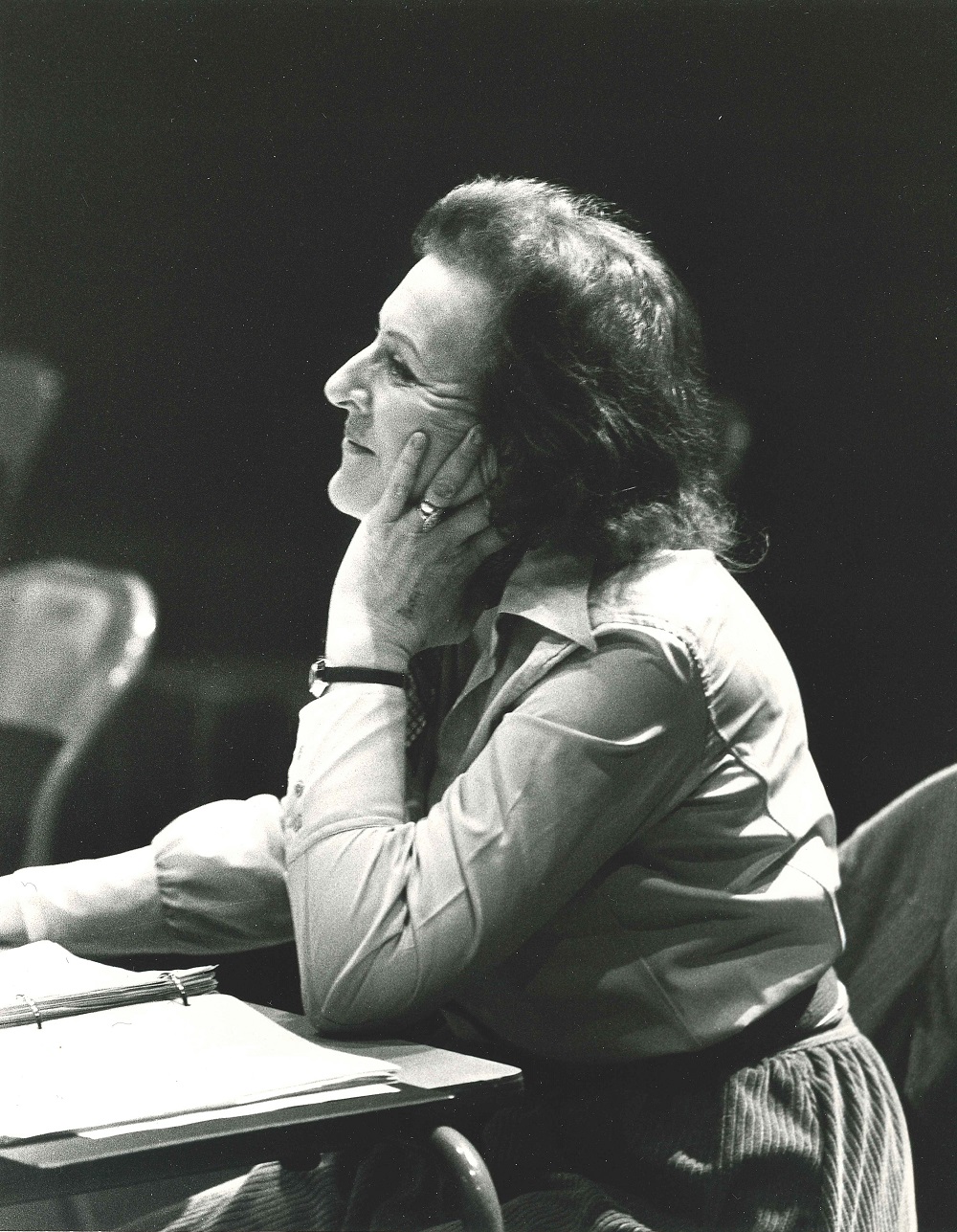
From taking direction to giving direction: Constance Fisher, opera stage director #tbt

Constance Fisher, known to all who worked with her as Connie, began her musical studies at the RCMT with Alberto Guerrero (piano), and Weldon Kilburn and Irene Jessner (voice), as well as with Herman Geiger-Torel at the opera school there. She made her debut in 1957 with the Opera Festival of Toronto (later COC) as the Mother in Hansel and Gretel. A member of the COC until 1966, she sang Musetta in La Bohème (1963) and, in touring productions, Fiordiligi in Così fan tutte (1963) and Rosalinda in Die Fledermaus (1964, 1965), among other roles.

Under the guidance of Herman Geiger-Torel and Boris Goldovsky, Ms. Fisher entered the field of stage direction as Assistant Director for both of these men and later as Stage Director and Instructor at the Banff School of Fine Arts.

In the 1967-68 season she made her directorial debut with the COC with a production of La Bohème and subsequently directed Barber of Seville, Tosca, and new productions of Il Tabarro and L’Heure Espagnol for the COC.

At the Banff School of Fine Arts she produced Orpheus in the Underworld, Madama Butterfly, Così fan tutte and Hansel and Gretel. Across Canada she directed for the Edmonton Opera Association (Die Fledermaus and Mikado), the Southern Alberta Opera Association (Die Fledermaus and the Barber of Seville), and the Manitoba Opera Association (Die Fledermaus).

Connie Fisher joined the Faculty of Music’s Opera Division staff in 1971 as a stage director and instructor, and then was designated divisional coordinator of the opera division in 1978. She was succeeded in 1983 by Michael Albano, who had begun as stage director in 1977. Albano and Fisher became associate coordinators of the division in 1987.

UofT Opera Production of Elixir of Love, January 1975,
UofT directorial debut of Constance Fisher

Her productions at the Faculty of Music include Elixir of Love, The Crucible (Canadian premiere), Don Giovanni, Orpheus in the Underworld, La Perichole, Katya Kabanova (Canadian premiere), Dialogues of the Carmelites, L’Oca delCairo, Gianni Schicchi, Sir John in Love (North American premiere), Albert Herring, and Cambiale di Matrimonio (Canadian premiere).

Quite a few of her productions were conducted by her husband W. James Craig who, in 1971, became head coach and conductor for the Opera Division. He had been a coach and conductor previously, 1958-64. In 1976, Craig became musical director for the Opera Division, and remained in the position in 1990.

James Craig in rehearsal, photo by Andrew Oxenham

Tonight is opening night of the Opera Division’s production of Mozart’s La finta giardiniera, conducted by alumnus Russell Braun and directed by Michael Albano.

While his career as a baritone performing on stages around the world continues, our Resident Operatic Performance Specialist Russell Braun makes his second appearance as a conductor with U of T.

UofT Opera Production of Patience, March 1990 with Valdine Anderson and Russell Braun

Article by Alexandra Brennan.

Founded the UTSO, the Canadian League of Composers, co-planned the Canadian Music Centre, was a composition prof at the Faculty, and wrote lots of music. The Dean of Canadian Composers, John Weinzweig #tbt

Composer John Weinzweig had an enormous impact on contemporary classical Canadian music.

Known as the “Dean of Canadian Composers”, Weinzweig received his MusBac from the Faculty of Music in 1937 (where he founded the original U of T Symphony Orchestra in 1935), went to study composition at Eastman, and returned to Canada where he worked at the CBC from 1941-1951 and began experimenting with serialism in his compositions.

Weinzweig-U-of-T-SO-March-1-1937
Weinzweig with U of T Symphony Orchestra, March 1, 1937

He was founder and first president of the Canadian League of Composers in 1951.

He joined the Faculty of Music in 1952 as associate professor and was co-planner of the Canadian Music Centre in 1959. His students included Murray Adaskin, Robert Aitken, Kristi Allik, John Beckwith, Norma Beecroft, Brian Cherney, Samuel Dolin, Harry Freeman, Srul Irving Glick, David Jaeger, Phil Nimmons, Harry Somers, R. Murray Schafer, Doug Riley, and Kenny Wheeler.

He was named an Officer of the Order of Canada in 1974. He taught at the Faculty until 1977 but continued to remain very active as a composer following his retirement from teaching.

Music Publishing Promotional Cover

The Canadian Encyclopedia describes his compositions: “In all Weinzweig’s works, however varied the problems engaged or the solutions offered, qualities remain that have characterized Weinzweig’s music since 1939: clarity of texture; economy of material; rhythmic energy; tight motivic organization, usually but not slavishly controlled through serialism; short melodic outbursts contrasted with long flowing lines; and harmonies that, though often harsh, never fully lose their tonal orientation. The tonal references are more likely to be modal suggestions, or progressions blurred by added pitches, than recollections from Western common practice. Weinzweig once said, speaking of his (mainly unhappy) undergraduate years: ‘No one ever explained tonality to me.’ The core of his compositional output is the series of 12 divertimentos, four of them written after 1982.”

Weinzweig had a knack for celebrating his music around his birthdays. He would have celebrated his 106th birthday next Monday.

The Faculty celebrated in 1988:

Toronto Star Article, March 5, 1988

Concerts were staged in honour of his 70th Birthday at Roy Thomson Hall (concert program [pdf; 19.4 mb]) and 80th Birthday in Walter Hall (concert program [pdf; 10.8 mb]).

A series of concerts were held for his centenary in 2013.

Weinzweig 80th Birthday celebration with (l-r) Harry Somers, Phil Nimmons, Victor Feldbrill, Weinzweig, R. Murray Schafer, and John Beckwith

Alumnus Richard Henninger wrote of John Weinzweig in 1973 on the occasion of his 60th birthday: “Now, at a time when mainstream twentieth century techniques are a fact of life in Canadian composition, we can look back and realize that, more than any other musician, John Weinzweig was responsible for initiating their usage. With his own music, in the early forties, Weinzweig broke the ground for the rest of us by putting sounds inspired by Berg and Stravinsky before radio and concert audiences at a time when such sounds were sure to meet resistance. By introducing contemporary techniques to a few sympathetic colleagues and students, he generated a small group of like-minded composers which became the foundation of the variety and quality found in Canadian music today.”

John Weinzweig was born in Toronto on March 11, 1913 and died in Toronto on August 24, 2006.

Early Music: performance and research leadership since the 70s #tbt

The Faculty of Music has been at the forefront of early music performance and research for many years.

From musicologists Professor Emeritus Mary Ann Parker, Professor Emeritus Timothy McGee, and now Professor Remi Chiu, to countertenor Professor Daniel Taylor and violinist Professor Jeanne Lamon (Music Director of Tafelmusik from 1981 to 2014), the Faculty has leaders in all aspects of the academic spectrum.

Toronto Consort archive photo
Toronto Consort early 1980s

The Toronto Consort traces its roots back to U of T Music, having been co-founded by Prof Tim McGee in 1972.

Professor Daniel Taylor joined the Faculty of Music in 2012 and quickly built the early music voice program as well as starting Schola Cantorum. Building the program for students through mentorship and collaboration with professional groups like the Tallis Scholars, Professor Taylor has led our students to one JUNO nomination in 2014 for The Heart’s Refuge with the Theatre of Early Music and the student ensemble Schola Cantorum and a second recording The Vale Of Tears that was released on Analekta in September 2015.

Last year Schola Cantorum had a performance that included guest singer Governor General of Canada Julie Payette:

University of Toronto President Meric Gertler, Lisette Canton, Head of Choral Music at York University, Daniel Taylor, Head of Early Music at the University of Toronto, the Governor General of Canada, Her Excellency The Right Honourable Julie Payette, and Dean Don McLean, University of Toronto Faculty of Music, 4 March 2018.

Upcoming: the weekend of March 9 and 10 will feature two Early Music Performances. Israel in Egypt will be performed on March 9 with conductors Jeanne Lamon and Daniel Taylor with guest tenor Charles Daniels. March 10 features guest conductor David Fallis with tenor Charles Daniels in a program titled Monteverdi and the Glory of Venice.

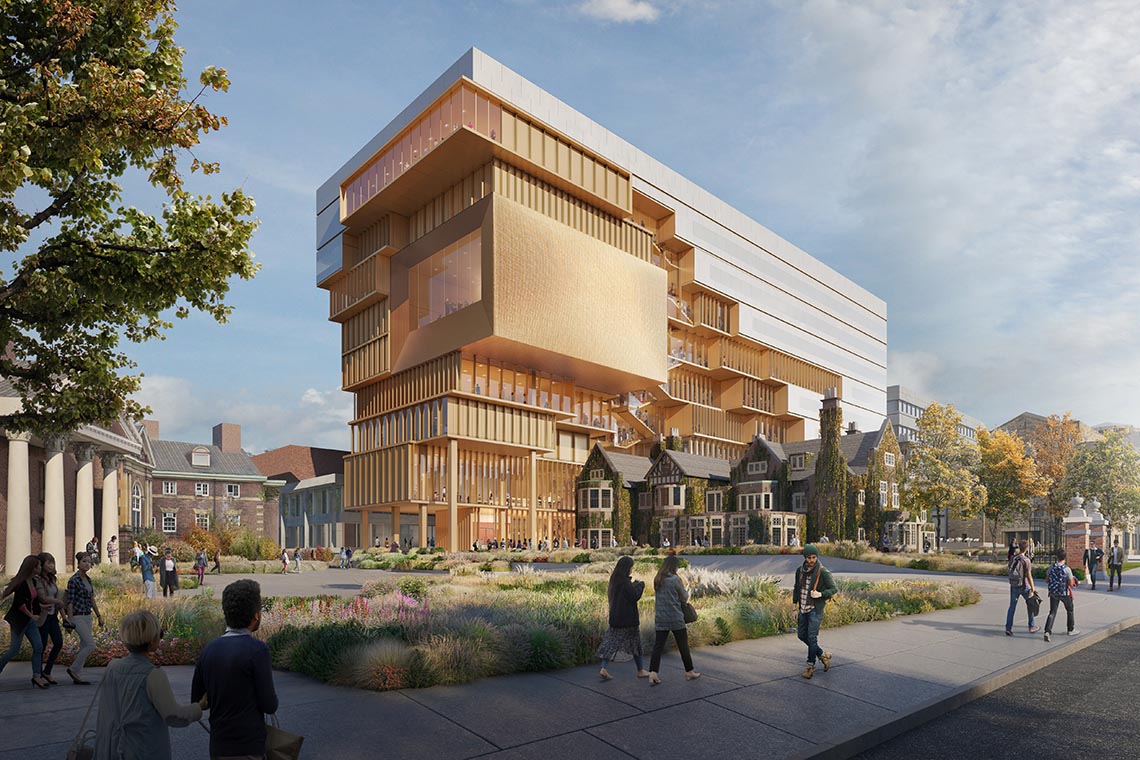
U of T announces new building at 90 Queen’s Park including new recital hall

How about that backdrop for a recital hall?

New Recital Hall rendering at 90 Queen’s Park. Two cellists…they are probably performing Schubert’s String Quintet in C major.
(rendering by bloomimages, courtesy of Diller Scofidio + Renfro)

Read more here.

Perform with TSO at age 10? Check. Carnegie Hall debut at age 11? Check. Teach at Faculty of Music and create the Faculty Artist Concert Series? Check. It’s pianist Patricia Parr. #tbt

After a solo career that began as early as age 10 when she had her debut with the Toronto Symphony Orchestra, Piano Professor Patricia Parr joined the Faculty of Music in 1974 after a previous appointment at Duquesne University. She retired from the Faculty in 1993.

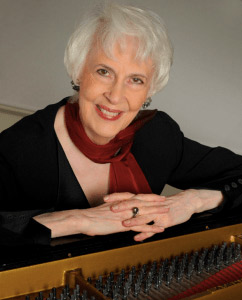
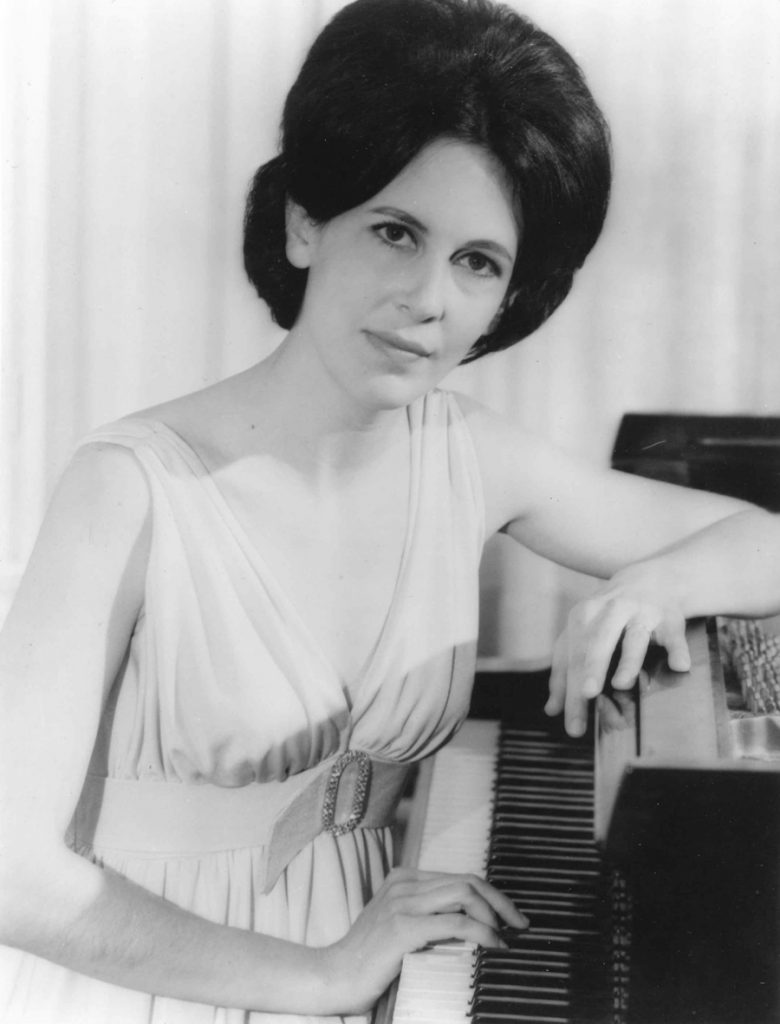
Piano Professor Patricia Parr, promotional photo mid-1970s.
Piano Professor Patricia Parr, early promotional photo.

Professor Parr established the Amici Chamber Ensemble with cellist David Hetherington and clarinetist Joaquin Valdepeñas in 1986 and continued to play with them until spring 2009. Amici recorded numerous albums, toured around the world, and had (and continues to have) an annual concert series in Toronto.

Parr was named a member of the Order of Canada in 2009. In 2016 she published her autobiography Above Parr with Prism Publishers.

Patricia Parr performing at the Massey Hall Centennial Celebration 1894-1994 with the Toronto Symphony Orchestra

Prof Parr was vital at the Faculty not only for her teaching and mentorship, but also for establishing the Faculty Artist Series of concerts. This concert series features faculty members in concert each year, and in the tradition of Amici Chamber Ensemble, also includes many friends of the Faculty. Proceeds from these concerts support an annual scholarship at the Faculty of Music.

As part of this year’s Faculty Artist Series, the Calidore String Quartet are performing in Walter Hall on Wednesday, February 27 at 7:30 pm.