The work of Professor Emeritus Doreen Hall has had a profound effect on music education in North America. Professor of music education from 1967-1985, she was the first teacher of Orff Method in North America.
In 1954 Doreen Hall became the first foreign student to study with Carl Orff in Salzburg. Following this, Prof Hall did the first English translation of Orff’s Musik für Kinder in 1956 and taught its methods to students in Canada and the United States.
Prof Hall coordinated the first ever public event held in the new Edward Johnson Building in July 1962.
Featuring composer and educator Carl Orff, the first International Conference on Elementary Music Education introduced Orff Schulwerk to over 160 participants.
Upon her retirement in 1985, Carl Orff Canada and friends and family of Doreen Hall established the Doreen Hall Scholarship, an award given annually to an outstanding undergraduate student preparing for a career in music education, particularly with children.
Doreen Hall was appointed a member of the Order of Canada in 2008.
Following his death 20 years ago on February 13, 1999, a bequest of about $450,000 in 1999 was made to the Faculty of Music that was matched by the province of Ontario. This established an endowment to support merit-based scholarships for undergraduate and graduate music students.
Since then, the endowment has paid out over $1 million dollars to support hundreds of Faculty of Music students.
Who made this generous gift?
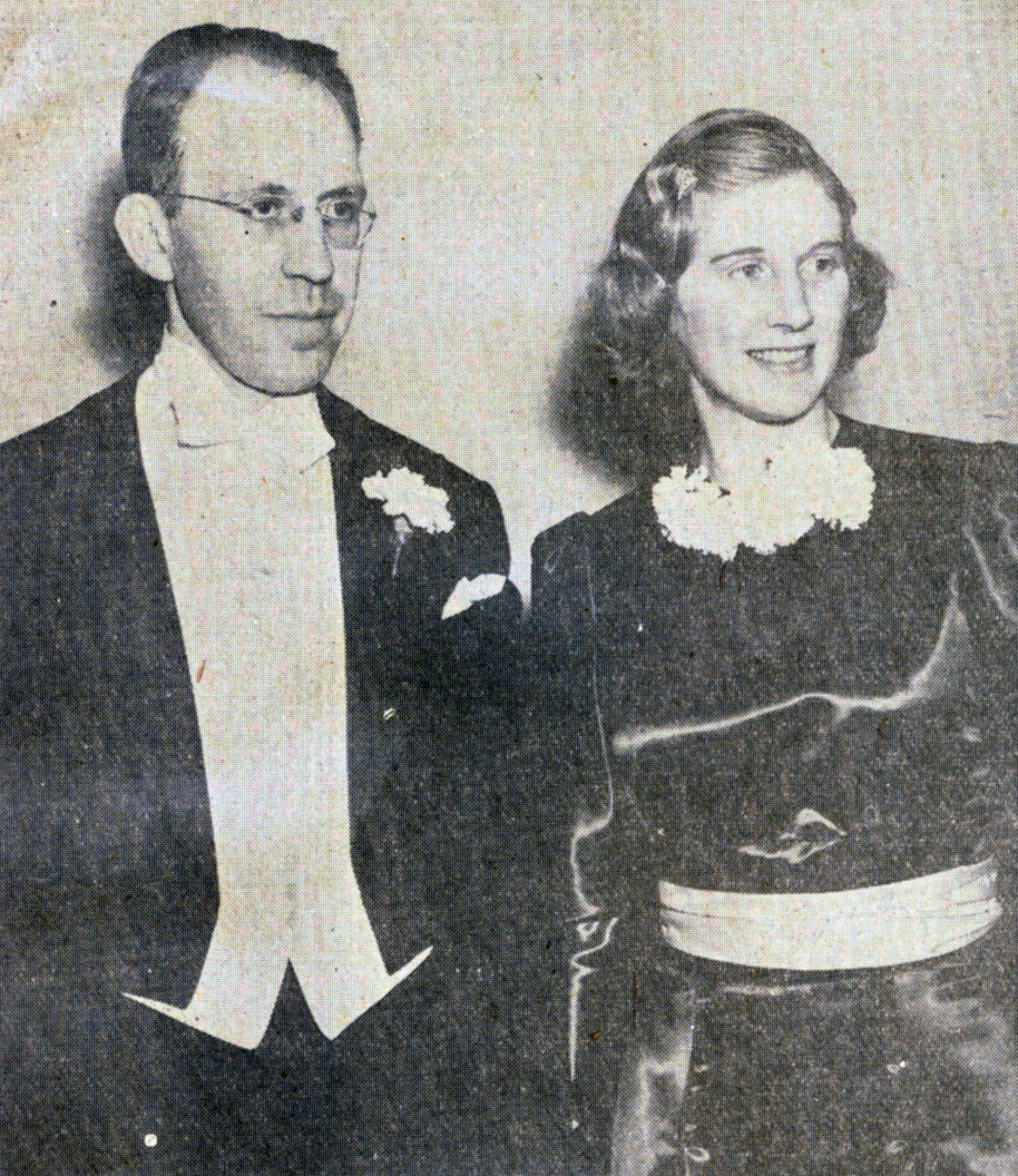
Arthur Plettner at his piano
Arthur Plettner (1904-1999) began his career under serendipitous circumstances. His mother had arranged for a piano teacher to come teach his older brother Edwin at their house and when Ed went on to other endeavours, Arthur’s mother wanted the teacher to remain employed, so she had Arthur take lessons in his brother’s place. And, when Arthur went with his parents to a symphony concert when he was 15, he observed the conductor and declared “That’s what I want to be!”
His parents, Frederick and Louise (Haarbrucker) immigrated from Germany to the United States; he from Wurzburg, Bavaria and she from Karklienen, East Prussia. Arthur’s father became a U.S. citizen in 1892 and played the trombone in the U.S. Navy. Louise had been married, but her husband and two young children had died, all within a year of each other. Widowed, she subsequently began a business as a seamstress. One day, fortuitously while crossing 14th street in New York City, she and Frederick recognized each other; he had been a friend of her deceased husband. They were married in June 1896. Arthur’s brother Edwin was born in March 1897, and Arthur on November 15, 1904 in Bronx, New York.
Arthur’s
parents took him to Germany
when he was five or six years old. They may have meant to only stay for a few
years, but the outbreak of World War I delayed their return. As a result,
Arthur was educated in Germany.
He studied flute and piano at the oldest conservatory in the country, the State
(prior to WW I, Royal Bavarian) Conservatory in Wurzburg. The family returned to New York in 1924.
At this
time, Arthur became Associate Conductor and Chorus Master for the German Comic
Opera Company in New York.
From 1928 to 1931, he served in a similar capacity at the Ziegfield, New
Amsterdam, and New Yorker Theaters in New
York. Following the onset of the Depression, Arthur
joined the faculty of the Emma
Willard Conservatory
as a piano and harmony teacher in November 1931. As the effects of the
Depression continued, the school decided to cut back the music department and
he left in the spring of 1932.
Undaunted, Arthur soon won a three year fellowship in 1932 at the Juilliard Graduate School in conducting where he studied under Albert Stoessel. During this period, until 1936, Arthur was staff arranger and member (flute and piccolo) with the Chautauqua Symphony Orchestra, and was pianist for the Children’s Concerts and Opera Orchestra as well. Simultaneously, he was staff arranger and member of the Worcester (Massachusetts) Festival Orchestra. Arthur’s association (and later his wife’s) with the Chautauqua Symphony continued into the 1940s.
In 1937 Arthur was appointed Juilliard Professor of Music at the University of Chattanooga, now the University of Tennessee at Chattanooga. He was elected Conductor of the Chattanooga Symphony Orchestra in October 1937 and continued in that capacity until 1949.
Arthur’s personal life changed at this time as well. In July 1938 he married Isa McIlwraith, who he had met in the Juilliard Graduate School conducting program, where she also had a three year fellowship. Her musical background was deeply impressive as well, having a BA from Barnard, a MA from Columbia, and a degree in sacred music from Union Theological Seminary. Following their marriage, she joined the Faculty of Music at Chattanooga as an Assistant Professor of Music, teaching history of music, counterpoint, form, and analysis. She also wrote program notes for the Chattanooga Symphony Orchestra and conducted when Arthur was a soloist. Later, Isa added the title of University Organist to her responsibilities. In addition to the several orchestral and choral compositions he had to his credit, Arthur wrote many organ compositions specifically for his wife’s use. More info on Isa’s career can be found in this thesis “Choral Activities at the University of Chattanooga From 1886-1969” by Ashley Nolan Cisto.
While a Professor, Arthur furthered his own education earning a Bachelor of Music degree in 1943 and a Doctor of Music in 1951, both from the University of Toronto Faculty of Music. Most of his studies were completed off-campus, although he travelled to Toronto periodically.
In addition to his mastery of Music, Arthur had a breadth and depth of knowledge of topics outside of his chosen field. His grasp of history was impressive and he had a special interest in model trains and a fascination with railroads in general.
Following their retirement from the University in 1973, the couple remained in their home in Signal Mountain, Tennessee. Dr. Plettner’s wife Isa passed away in December 1997 at the age of 88 and he died on February 13, 1999 at the age of 94.
Biography largely taken from letter from niece in 1999.
Top photo of Arthur and Isa from The Chattanooga Times, 27 November 1938.
Appointed as Associate Professor in performance and music education in July 2005, Dr. Gillian MacKay took over conducting duties of the Wind Ensemble as well as teaching trumpet and conducting. Prior to joining the Faculty she was Director of the School of Music at the University of Windsor.
Dr. MacKay conducting in MacMillan Theatre, 2018.
Gillian has an active professional career as a conductor, adjudicator, clinician and trumpeter. She has conducted honour ensembles throughout Canada and the United States, and is Associate Conductor of the Denis Wick Canadian Wind Orchestra. Dr. MacKay has adjudicated Canadian band festivals at local, provincial, and national levels in Canada. She has conducted honour bands and judged competitions in the US, Singapore, Thailand, and Korea.
Currently, she is investigating the application of the Michael Chekhov acting technique to movement and meaning in conducting. Recognized as a conducting pedagogue, Gillian leads the University of Toronto Wind Conducting Symposium each July.
For an excellent look at her philosophy of teaching, performing, and her story as a musician, graduate Dylan Rook Maddix (MMus 2016) interviewed Dr. MacKay in September 2017 for his podcast The Band Room.
See Dr. MacKay lead the Wind Ensemble this Saturday, February 2 at 7:30 pm in MacMillan Theatre. It will be a collaborative effort with percussion professors Aiyun Huang and Beverley Johnston as well as the strings of the UTSO.
Next Tuesday on January 29 marks what would have been singer Lois Marshall’s 95th birthday.
Canada’s most well-known soprano in the 1950s and 1960s, Lois Marshall received an Artist Diploma from the RCM in 1950 (when she also won the Eaton Graduating Prize for top performance graduate that year).
Following an incredible New York debut (wonderfully captured in this 1953 MacLean’s article – ‘”John Briggs, of the Times, stayed for the encores and the critics never, simply never, stay for the encores. And Peggy Hicks, of the Herald Tribune, applauded enthusiastically. If Lois doesn’t get good reviews I’ll shoot them.'” ) and many performances in North America, she was one of the first foreign artists to tour the USSR in 1958 with pianist (her vocal coach and later, her husband) Weldon Kilburn.
Here is footage of Lois Marshall performing “Hark! The Echoing Air” from “The Fairy Queen” by Henry Purcell. She is accompanied by the Amsterdams Kamerorkest in this performance which aired on 29 September 1963.
In 1965 Marshall was the first woman to receive an honorary doctorate degree from the Faculty of Music.
She began singing as a mezzo-soprano in the mid-70s. In 1986 she began teaching at the Faculty of Music until she passed away in 1997 at age 72.
In 2000, accompanist and lyric diction instructor Che Anne Loewen established the Lois Marshall Chair in Voice with a donation of $250,000. Following additional gifts reaching $750,000 from friends and colleagues, the university matched the donations for a total endowment of $2 million. Voice Professor Lorna MacDonald has held the Lois Marshall Chair in Voice since its inception.
Below is a photo from September 30, 1987 in the common room (now the Barker-Fairley Room) with Professor Oskar Morawetz (left) and Professor Carl Morey at a reception honouring Marshall as recipient of the 1987 Award for Music presented by the Toronto Arts Awards Foundation and Morawetz for receiving the inaugural 1987 Order of Ontario.
After writing about the Electronic Music Studio last week we discovered some more things to share! So here goes, in no particular order:
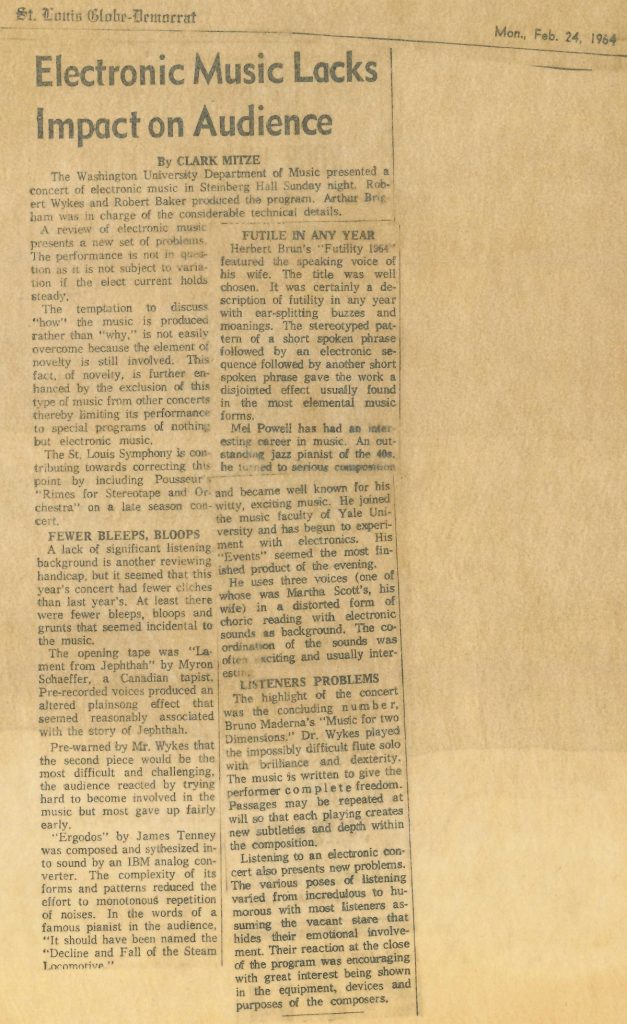
Electronic Music Studio’s original home in 1959 at house at 2 Division Street Electronic Music Studio 1963 with Myron Schaeffer Electronic Music Studio in 1963Electronic Music Studio, 1963 with studentsHamograph by Myron Schaeffer, 1962 “A New Amplitude‐Rhythm Control Device for the Production of Electronic Music”Electronic Music brochure UofT Music p1of2 1963 Electronic Music brochure UofT Music p2of2 1963Electronic Music Lacks Impact on Audience 1964 article w Prof SchaefferSynth inventor Bob Moog’s first voltage control filter, commissioned by the Electronic Music Studio in 1964. Piece 3 of 5.
Carl Morey loved the sound of the human voice and spent his career teaching the joys of music to students and the public at large.
Morey was a professor in the Faculty of Music at the University of Toronto for three decades, served as dean from 1984 to 1990, and held the prestigious Jean A. Chalmers Chair at the Institute for Canadian Music in the 1990s. He died on Dec. 3 at the age of 84.
In May 1959, the Electronic Music Studio at the Faculty of Music was officially established by Dr. Arnold Walter. Dr. Hugh Le Caine of the National Research Council of Canada was technical advisor and the original faculty members included Dr. Walter, Professor Harvey Olnick, and Professor Myron Schaeffer.
The studio was the second one in North America, following the creation of the Columbia-Princeton Electronic Music Center the previous year. It was originally located on Division St (now the site of the CAMH building near Spadina and College) but plans were already being made to expand into a new space.
Professor Myron Schaeffer in the first electronic music studio, located in a house on Division St on U of T St. George campus, 1959
Once the Edward Johnson Building was completed, the Electronic Music Studio was moved to a basement location, placed there to avoid other noise and vibrations in the building.
Professors Myron Schaeffer and Arnold Water in the Electronic Music Studio in the Edward Johnson Building, early 1960s
Work at the studio expanded quickly and composers and composition students across North America flocked to the facility, such as composer Lowell Cross who went on to invent laser light shows. While a student here, Cross designed and constructed a musical chessboard whose March 1968 performance of Reunion included John Cage and Marcel Duchamp. (Further details here and here.)
Composer Norma Beecroft was an independent scholar here, and in 1971 the Canadian Electronic Ensemble was established by David Grimes, David Jaeger, Larry Lake, and James Montgomery.
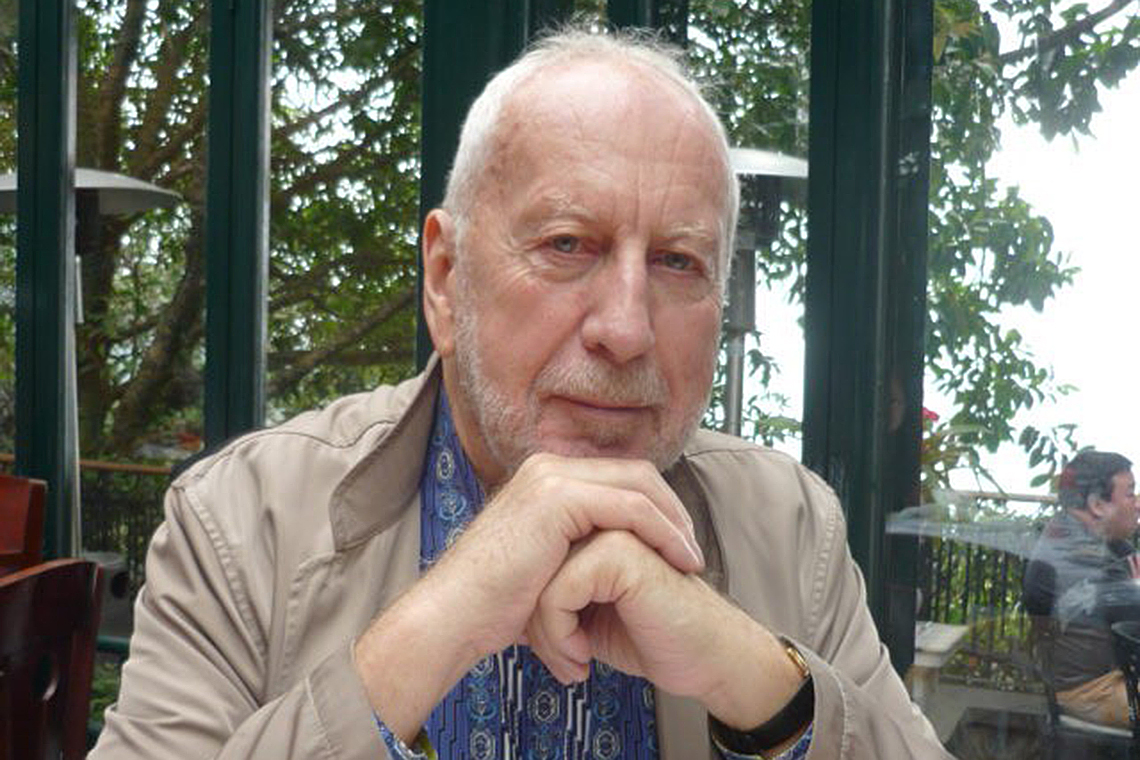
New instruments and equipment were commissioned and invented here, and alumni went on to establish or were involved in new electronic music studios at universities around the world, such as composer Dr. Jean Eichelberger Ivey (DMus 1972) who founded the electronic music studio at the Peabody Conservatory of Music at John Hopkins University and Bruce Pennycook (shown in top photo in 1975, image courtesy of eContact!) who is currently a composition professor at the Butler School of Music at University of Texas at Austin.
Professor Gustav Ciamaga joined the Faculty in fall 1963 and took over the studio in 1965 following Professor Schaeffer’s death.
Professor Gustav Ciamaga in the Electronic Music Studio, early 1960s
From the Canadian Encyclopedia: “Composer, teacher, writer, b London, Ont, 10 Apr 1930, d Toronto, 11 Jun 2011; MFA (Brandeis) 1958. [Gustav Ciamaga] attended the University of Western Ontario 1951-4 while studying privately with Gordon Delamont. He studied composition 1954-6 with John Weinzweig and John Beckwith at the University of Toronto and composition and musicology at Brandeis U in Waltham, Mass, where his composition teachers were Arthur Berger, Harold Shapero, and Irving Fine. He continued his studies in Waltham until 1963, and also organized an electronic studio. He joined the Faculty of Music, University of Toronto, in 1963 and became director of the Electronic Music Studio in 1965 and chairman of the theory and composition department in 1968. On sabbatical in 1970 he worked in several European electronic studios. He was dean of the Faculty of Music 1977-84 and acting principal of the RCMT 1983-4.”
An interview with Prof Ciamaga in 2008:
During the 1994-95 academic year, half of the electronic music studio was transformed into a recording studio. And during the 2017-18 and current academic year the electronic music studio has been undergoing another renovation with new equipment.
The New Music Festival is now in its 22nd year. We are excited this year to host composer Toshio Hosokawa, the 2018-19 Roger D. Moore Distinguished Visitor in Composition. His music will be performed throughout the festival. Tonight will be an opera double bill: The Raven and The Maiden from the Sea (Futari Shizuka).
Additional Resources and references for the Electronic Music Studio:
Two types of orchestra have flourished at the University of Toronto, fulfilling two different functions. There have been recreational orchestras, whose primary aim is to give the participants an enjoyable outlet for their musical talents. These groups are populated with players from the wider university community and concentrate on the most popular standard repertoire works; their main goal is the enjoyment of sociable music making rather than professional training. On the other hand, orchestras made up solely or mostly of university music students aim for the highest performance standards, offer valuable training to aspiring young musicians, and in addition to the standard repertoire often perform quite demanding works, including contemporary repertoire and new music.
One characteristic feature of student orchestras is the high turnover
rate. The graduating class leaves the orchestra each year, resulting in the
departure of about one quarter of the players each season. This is one reason
that a university ensemble can never quite reach the standards of a top quality
professional orchestra, in which musicians typically play together for many
years, with a much lower turnover rate. But it also gives a freshness to the student
orchestra that more polished groups may lack; many of the young musicians are
performing difficult but rewarding orchestral repertoire for the very first
time, with all of the excitement and enthusiasm that brings.
Beginnings
The University of
Toronto has been home to many recreational and training orchestras over the
years, both preceding and following the creation of the Faculty of Music in
1918. The earliest orchestra loosely associated with the University of Toronto was
the Toronto Orchestral School, which began rehearsals in 1891 under the aegis
of the Toronto College of Music. The College had been founded in 1888 by F.H.
Torrington (1837-1917); two years later it became the first music school affiliated
with the University of Toronto. Torrington was born in England and arrived in
Toronto in 1873. He was an organist and violinist, and also conducted a series
of local choirs and orchestras, contributing greatly to the development of the
city’s concert life. The Toronto Orchestral School rehearsed on Monday evenings
during the academic term under Torrington’s direction, and gave at least one
public concert each year. In June 1894 it performed during one of the five
concerts celebrating the opening of Massey Hall. At its height it was a
100-piece orchestra, with a few teachers added to the ranks to help out the students.
No record of its activities beyond 1900 has been found.
In 1896 a rival institution, the Toronto Conservatory of Music, became the second music school to be affiliated with the University of Toronto. In 1906 the Conservatory hired Frank Welsman (1873-1952) to organize an orchestra. He was a Toronto-born pianist and conductor who had studied music locally and at the Leipzig Conservatory. On April 11, 1907 his 50-piece Conservatory Symphony Orchestra debuted at Massey Hall. The orchestra consisted of students, teachers, and community members, including professional musicians brought in to assist the less experienced players. After two years of improving standards, the orchestra dropped its official association with the Conservatory and was renamed the Toronto Symphony Orchestra (TSO). The Welsman TSO flourished for ten years or so but fell victim to the First World War. It ceased operations in 1918, the same year that the University of Toronto created the Faculty of Music.
The Weinzweig UTSO
John Weinzweig conducting the UTSO at Convocation Hall, March 1, 1937. Image courtesy of http://www.johnweinzweig.com/
When the composer John
Weinzweig (1913–2006) was an undergraduate music student at the Faculty of
Music, he ran an ad in the student newspaper The Varsity in 1934 soliciting players for an orchestra. This led
to the creation of the first University of Toronto Symphony Orchestra, which
gave its debut concert on March 9, 1935, featuring Schubert’s “Unfinished”
Symphony and other works. Despite sharing the same name, however, Weinzweig’s
orchestra was not really a direct predecessor of the current UTSO.
Weinzweig’s UTSO was run by the university’s Student Administrative Council rather than the Faculty of Music, and was more of a community orchestra than a professional training orchestra. Weinzweig’s connection with the UTSO ceased when he left Toronto for graduate studies at the Eastman School of Music in 1937. But the UTSO which he had founded continued on until the 1960s. It was conducted over the years by, among others, Victor Feldbrill (1943; more about him later), John Reymes-King (1944; he later founded the music program at the University of Alberta and received the first PhD in music from the University of Toronto in 1950), Hans Gruber (1945–48; later conductor of the Victoria SO), Harold Neal (1949; later conductor of the Brantford SO); Lee Hepner (1949–50; later founding conductor of the Edmonton SO); Elmer Iseler (1950; later a renowned choral conductor); Keith Girard (1952; later a flute player in the TSO); Robert Rosevear (mid-1950s; the orchestra often appeared with the University of Toronto Chorus under Richard Johnston during these years), Milton Barnes (1963; he had been a composition pupil of Weinzweig); Albert-Josef Schardl (1963–64), and Tibor Polgar (1965–66). Gruber was a student when he conducted the UTSO, and Girard was a recent graduate, while both Rosevear and Johnston were faculty members. Schardl (1930–2018) was a US violinist, conductor, and composer of Austrian parentage. A self-proclaimed “genius,” he claimed to be fluent in seven languages, and was working for Berlitz in Toronto at the time.
In the recent University of Toronto promotional video there is a brief image at 44 seconds (blink and you will miss it) of an orchestra – shown in the still image above. This is the University of Toronto Symphony Orchestra, with conductor Keith Girard (MusBac 1951), in March 1952. The source of this image is the U of T Archives Image Bank, available online here.
The first UTSO premiered new works by Canadian composers on occasion, including Talivaldis Kenins, Alfred Kunz, Richard Johnston, and Charles Wilson. Student musicians often appeared as soloists with the orchestra, e.g. the pianist George Crum (who became the first music director of the National Ballet of Canada) played the opening movement of the Schumann Piano Concerto and some solo works on February 20, 1946. This UTSO ceased operations shortly before the Faculty of Music took over the UTSO name for its student orchestra in January 1969.
Hart House Orchestras
The Hart
House Orchestra, founded in 1976, is similar to the Weinzweig UTSO
in that it has no official affiliation with the Faculty of Music, and its 80 to
90 musicians are chosen by audition from the broader U of T community. The
orchestra typically performs three concerts in Hart House each season, and one
concert on tour. To celebrate its fortieth anniversary season and the
Sesquicentennial of Confederation, the orchestra performed in Carnegie Hall in
February 2017. An earlier Hart House Orchestra performed from 1954 to 1971 under
the conductor Boyd Neel. It was a professional chamber orchestra of varying
size and quality which made a number of recordings and toured widely.
The Conservatory Symphony Orchestra
Meanwhile, back in
1919, the university had taken control of the Toronto Conservatory of Music
(which became the Royal Conservatory of Music in 1947). Instead of a loose
affiliation, which had been the arrangement since 1896, this merger resulted in
the University of Toronto assuming the Conservatory’s assets and overseeing its
operations, while continuing to support the Faculty of Music as well. This union
between the Conservatory and the University of Toronto was not always a happy
one, but it lasted for 72 years. In 1924 a new student orchestra started up at
the Conservatory under Luigi von Kunits, a Viennese-born conductor, composer,
and violinist who had become the conductor of the revived TSO in 1922. Also in
1924, a junior orchestra class was started up at the Conservatory under the
violist Milton Blackstone, to prepare younger students for the more advanced
orchestra. The baton for the senior student orchestra passed on from Kunits to the
violinist Donald Heins in 1930, and then to Ettore Mazzoleni in 1934.
Mazzoleni led the Royal Conservatory Orchestra for over 30 years. He was
born in Switzerland in 1905, moved to England as a boy, and was educated at
Oxford and the Royal College of Music. He immigrated to Toronto in 1929 to
teach at Upper Canada College, joined the Conservatory teaching staff in 1932,
and married Ernest MacMillan’s sister Winnifred in 1933. His vision for the Conservatory
orchestra was that it should not only provide music students with professional
training and an introduction to the great works of the symphonic literature, but
also allow Conservatory composition students and other young composers a chance
to hear their orchestral scores in live performance. And so in addition to the
standard repertoire, Mazzoleni introduced a great deal of new Canadian music by
composers such as Brian Cherney, Harry Freedman, Richard Johnston, Paul
McIntyre, Oskar Morawetz, Clermont Pépin, and Harry Somers.
Boyd Neel also conducted the Conservatory’s student orchestra on
occasion starting in 1956. Neel had arrived in Toronto from England in 1953 to
become the Dean of the Royal Conservatory of Music (and, as noted above, he started
up the Hart House Orchestra in 1954). Mazzoleni and Neel, together with Sir
Ernest MacMillan, shared the orchestral conducting duties for the week-long
festival in March 1964 that marked the official
opening of the Edward Johnson Building (EJB). The 815-seat MacMillan
Theatre in the EJB became the fine new venue for the concerts of the student
orchestra. After Mazzoleni’s death in a traffic accident in 1968, the Czech
conductor Karel Ančerl led the Conservatory orchestra for the first term of the
1968–69 season during his brief stint as an artist-in-residence at the Faculty
of Music. Ančerl had just recently immigrated to Toronto following the 1968
Soviet invasion of Czechoslovakia. He led the last performance of the Royal
Conservatory Symphony Orchestra on December 6, 1968. In 1969 he assumed duties
as the conductor of the TSO, a position which he held until his death in 1973.
UTSO: The Feldbrill Era
Victor Feldbrill conducting UTSO rehearsal, early 1970s.
The renamed University of Toronto Symphony Orchestra gave its first concert under its new conductor, Victor Feldbrill, on January 17, 1969. The program included works by Weber, Weinzweig, and Mahler in the first half and Shostakovich’s Fifth Symphony after intermission. The UTSO and Feldbrill then toured to Montreal and Ottawa with this program. The orchestra now consisted entirely of students at the Faculty of Music; gone were the days of teachers and community members filling out the ranks at concert time. Feldbrill had conducted the earlier UTSO on February 25, 1943 as an 18-year-old secondary school student. He went on to study music at the U of T, graduating with an Artist’s Diploma in 1949. More recently, he had just finished a ten-year stint as the principal conductor of the Winnipeg Symphony. He had lots of experience working with young musicians, having conducted the National Youth Orchestra of Canada on numerous occasions during the 1960s. He was named the conductor-in-residence at the U of T in 1972, and was also founding conductor of the Toronto Symphony Youth Orchestra from 1974 to 1978. The UTSO gave three concerts per season under Feldbrill and played for two Faculty of Music opera productions each year, including demanding works such as Humphrey Searle’s Hamlet in February 1969 (the North American premiere, with the composer present), Stravinsky’s The Rake’s Progress in December 1971, Verdi’s Falstaff in January 1973, and Janáček’s Káťa Kabanová in March 1977.
This logo was introduced when the Royal Conservatory Orchestra was renamed the University of Toronto Symphony Orchestra in January 1969 and for years it appeared on the cover of the concert programs.
I played in the first violin
section of the UTSO for the 1979–80 season when I began my graduate studies in
musicology at the U of T. The concerts under Feldbrill were all memorable
experiences for me. The first featured the superb Passacaglia and Fugue by Harry Somers, Ravel’s Piano Concerto in G
with Stella Ng as soloist, and Beethoven’s Fifth Symphony. We also did Mahler’s
First Symphony that season, Richard Strauss’s Till Eulenspiegel, and the Marimba Concertino by Paul Creston with soloist
Beverley Johnston (who is now, like me, a faculty member at U of T). Two
composers appeared as guest conductors of their music that season, and how contrasted
they were! The Toronto musician Ben McPeek led the orchestra on December 1, 1979
in a performance of selections of his music, including his “Commercial”
Overture, based on jingles he had written for radio and television ads, such as
his unforgettable signature tune for TD Bank (“To-RON-to Do-MIN-ion”). McPeek
was known as the “Jingles King” and wrote over 2,000 catchy tunes during his
short career until his untimely death from cancer in 1981 at the age of 46. By
way of complete contrast, the Quebec composer, conductor and new music advocate
Serge Garant appeared for a performance of his challenging work Phrases II (1968) on 12 April 1980, in
which the orchestral musicians speak (phrases from the writings of Che Guevara)
as well as play. Garant and Feldbrill co-conducted the work, in which the
orchestra is split into two sub-orchestras side by side on stage.
Among the many highlights of Feldbrill’s years with the UTSO were the world premiere of R. Murray Schafer’s epic work Divan i Shams i Tabriz for seven singers, orchestra, electronic organ, and four-channel tape sounds on April 8, 1972; a performance of Weinzweig’s Dummiyah on March 10, 1973 to celebrate the composer’s 60th birthday (repeated on March 18 for a concert in Ottawa at the National Arts Centre); Beethoven’s Ninth Symphony – always a significant event in the life of an orchestra – on March 9, 1975; and Stravinsky’s The Rite of Spring – a demanding work for a student orchestra –on March 6, 1976. Outstanding student soloists who performed under Feldbrill included the cellist Janet Horvath in Tchaikovsky’s Roccoco Variations (March 10, 1973) and the violist Steven Dann playing the Walton Viola Concerto (October 25, 1975).
This opening page of Schafer’s score for Divan i Shams i Tabriz is a visual representation of the tape sounds; it was included as an insert in the program for the UTSO world premiere of the work in 1972.
To mark the end of Feldbrill’s 14-year term as the UTSO resident conductor, he led a performance of Mahler’s Symphony No. 2 on April 3, 1982 – the day before his 58th birthday. The program noted that 166 students who had played under Feldbrill’s direction in the UTSO went on to join professional orchestras in Canada, the USA, and Europe. It also listed all of the repertoire the UTSO had performed under his direction: 122 different works by 59 composers, with four world premieres and four Canadian premieres. Feldbrill returned to the UTSO several times over the years as a guest conductor, e.g. a concert in 1999 to mark the 50th anniversary of his graduation from the U of T and, most recently, a concert on April 6, 2013 (two days after his 89th birthday) featuring Weinzweig’s Symphonic Ode to mark the centennial of the composer’s birth (Feldbrill had programmed this work in his first concert with the UTSO in 1969), with Tchaikovsky’s Serenade for Strings and Dvořák’s Symphony No. 8. The 2013 concert also marked the 70th anniversary of Feldbrill’s conducting debut with the earlier UTSO in 1943.
The UTSO under Tabachnik, Hétu, and Bennett
After Feldbrill’s departure, the UTSO played under a series of guest conductors for three seasons, including Mario Bernardi, Kazuhiro Koizumi, and Otto-Werner Mueller. Canadian works programmed included the Suite for Harp and Chamber Orchestra by Harry Somers with harpist Laura Stephenson on January 21, 1984, and the Concerto for Five Percussionists and Orchestra by Talivaldis Kenins on March 31, 1984. The Kenins work was a premiere to mark his retirement from the Faculty of Music; the soloists were five student performers from the studio of Russell Hartenberger.
The Swiss conductor Michel Tabachnik became the UTSO’s regular conductor
in 1985 and held the position until 1991. He was no stranger to Toronto, as he
had conducted a number of Canadian Opera Company productions earlier in the
1980s. In addition to the standard repertoire (with a notable emphasis on
French music), Tabachnik programmed contemporary works by Messiaen, Varèse, and
Xenakis, as well as Canadian compositions by Clermont Pépin (Symphony No. 3 “Quasars”)
and U of T composers Lothar Klein (Design
for percussion and orchestra) and Oskar Morawetz (Passacaglia on a Bach Chorale). Performances by the UTSO under
Tabachnik were recorded for later broadcast on radio station CJRT. Tabachnik’s final
concert with the UTSO was given in January 1991. The Quebec conductor Pierre
Hétu stepped in as a guest conductor for the last UTSO concert of that season,
after which he was chosen to be the resident conductor of the UTSO. Incidentally,
Tabachnik later gained notoriety when his links to the doomsday cult Order of
the Solar Temple were the subject of a sensational court trial in France in
2001, but he was acquitted by the court and resumed his prominent international
conducting career.
Hétu was born and educated in Montreal and had also studied conducting under Louis Fourestier at the Paris Conservatoire. He was the artistic director of the Edmonton SO from 1973 to 1980, and had guest conducted across Canada and in Europe. For the final concert of his first complete season with the UTSO (on April 10, 1992), Hétu programmed Weinzweig’s Symphonic Ode and Shostakovich’s Fifth Symphony, both of which had featured in the very first concert given by the orchestra under Feldbrill in 1969. Other Canadian works heard during Hétu’s brief term as resident conductor included Lothar Klein’s Festival Partita and Chan Ka Nin’s Ecstasy. Hétu was not able to appear to conduct a scheduled program of works by Beethoven, Liszt, and Kodály on January 21, 1994 due to ill health, and stepped down from his position at U of T. He had to drastically curtail his conducting appearances from that point until his death from cancer in 1998. Dwight Bennett, a U of T alumnus who had studied conducting with both Ančerl and Feldbrill, stepped in to take Hétu’s place for the last two concerts of the 1993–94 season, and then was named resident conductor.
The high quality of string playing in the UTSO during the 1980s and 1990s is evidenced by the following list of student soloists with the orchestra. These musicians all went on to have significant careers in string performance, as can be seen by following the links for each name:
Student Work performed Date Conductor
Carol Lynn Fujino Tchaikovsky Violin Concerto March 30, 1985 O-W Mueller
Krista Buckland Bruch Violin Concerto, Op. 26 October 17, 1987 M. Tabachnik
Barry Shiffman Tchaikovsky Violin Concerto April 9, 1988 M. Tabachnik
Mary Ann Fujino Walton Violin Concerto April 1, 1989 M. Tabachnik
Jeremy Findlay Dvořák Cello Concerto November 30, 1990 R. Bradshaw
Jeremy Bell Brahms Violin Concerto April 10, 1992 P. Hétu
Erika Raum Bartók Violin Concerto No. 2 October 17, 1992 P. Hétu
Mark Fewer Barber Violin Concerto April 3, 1993 P. Hétu
Bennett’s ambitious first complete season with the UTSO included performances of Berlioz’s Symphonie fantastique,Beethoven’s Ninth Symphony, and Schafer’s iconoclastic Son of Heldenleben. His second season opened with the premiere of Danseries: Three Orchestral Dances by Lothar Klein and concluded on March 30, 1996 with a demanding program that featured Schoenberg’s Variations for Orchestra, Op. 31 and Mahler’s Fifth Symphony, both works new to the UTSO. Continuing this trend, his third season concluded on April 5, 1997 with an even more demanding program: Varèse’s Ionisation, Ravel’s Bolero, and Stravinsky’s The Rite of Spring. Having brought the orchestra to that summit of the orchestral repertoire, Bennett stepped down from his role with the UTSO to take up concurrent positions in Tel Aviv and Kyiv.
The UTSO under Armenian, Briskin, and Mayer
The next two seasons (1997–98 and 1998–99) again featured a series of guest conductors, including Feldbrill, Peter Oundjian (at the beginning of his conducting career, following his retirement from the Tokyo String Quartet), Daniel Swift, and two men who would later become resident conductors of the UTSO, Raffi Armenian and Uri Mayer. Works performed during those two seasons included Beethoven’s Fifth Symphony, Berlioz’s Symphonie fantastique, Brahms’s Symphony No. 1, Schumann’s Symphony No. 4, and Tchaikovsky’s Symphony No. 5. Student soloists included the violinist Elissa Lee in Bartók’s Violin Concerto No. 2 (October 25, 1997), cellist Rachel Mercer in Bloch’s Schelomo (February 7, 1998), soprano Measha Brueggergosman in Berlioz’s Les nuits d’été (January 23, 1999), and violinist Shane Kim in Chausson’s Poème (November 28, 1998). Doreen Rao, the director of choral activities at the U of T, led the UTSO and the university choirs in the premiere performance of faculty member Walter Buczynski’s A Ballad of Peace on April 4, 1998 (Buczynski retired the next year).
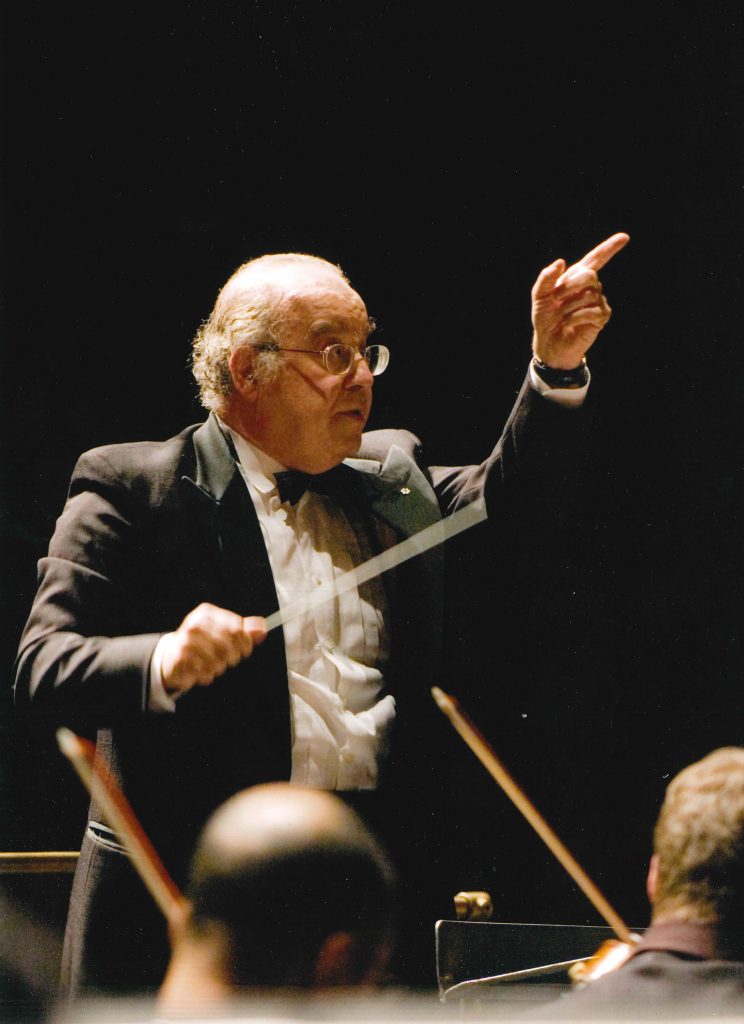
Raffi Armenian in MacMillan Theatre, early 2000s
Raffi Armenian was chosen to be the new resident conductor of the UTSO
starting with the 1999–2000 season. He brought a wealth of experience with both
professional and student orchestras to the position. He had served from 1971 to
1993 as the conductor of the Kitchener-Waterloo Symphony, and he conducted the
student orchestra at the Conservatoire de Montréal from 1981 to 2013, holding the
UTSO position concurrently with that role. He also had directed the orchestra
and taught conducting at the Hochschüle für Musik in Graz from 1997 to 1999.
With residences in Vienna, Montreal, and Toronto, Armenian and his wife, the
conductor Agnes Grossmann, enjoyed busy, cosmopolitan lives. Armenian conducted
the UTSO from 1999 to 2008, stepping down to become the director of the
Conservatoire in Montreal, a position he held until 2011. He continued to teach
conducting and lead the orchestra at the Conservatoire in Montreal until his
retirement in 2013.
Armenian brought the UTSO and l’Orchestre symphonique du Conservatoire
de Montréal together on three occasions for memorable concerts in MacMillan
Theatre. On March 6, 2002 the combined student orchestras performed Mahler’s
Sixth Symphony; on February 4, 2006 they played Stravinsky’s The Rite of Spring and Shostakovich’s
Symphony No. 10; and on December 8, 2007 they performed Berg’s Three Pieces for Orchestra, Op. 6,
Ravel’s brilliant orchestration of his “Alborada del gracioso” from Miroirs, and Strauss’s Ein Heldenleben. With the exception of
the Stravinsky, these works were all new to the UTSO. Armenian passed the baton
to his wife on three occasions: Grossmann led the UTSO in performances of
Bruckner’s Symphony No. 4 on 7 April 2001, Dvořák’s Symphony No. 9 on October
13, 2001 and Mahler’s Symphony No. 1 on March 30, 2007.
The repertoire under Armenian’s direction ranged from Bach to Schafer. There was plenty of Wagner, with orchestral excerpts from Lohengrin, the Ring, and Parsifal, as well as the Wesendonck Lieder and the ever popular overture to Die Meistersinger. In addition to Mahler’s Symphony No. 6 with the Conservatoire orchestra, he also led the UTSO in a performance of Mahler’s Symphony No. 3 on April 8, 2000. Those two performances marked the completion of the UTSO’s traversal of the first six symphonies by Mahler. Armenian featured faculty members as soloists on occasion, e.g. Lorand Fenyves in Bartók’s Violin Concerto No. 2 (October 14, 2000) and Scott St. John and Shauna Rolston in the Double Concerto by Brahms (December 8, 2004). Student soloists included Amanda Goodburn in the Brahms Violin Concerto (April 7, 2004), Min-Jeong Koh in Prokofiev’s Violin Concerto No. 1 (April 9, 2005) and Joël Cormier in Robert Kurka’s Marimba Concerto (December 9, 2005). The amount of Canadian repertoire performed by the UTSO diminished during Armenian’s term, but there was one notable premiere. The five-man percussion ensemble Nexus, artists-in-residence of the Faculty of Music at the time, gave the first performance of Schafer’s Shadowman, which was commissioned for Nexus and the UTSO by Michael Koerner. Writing of the premiere in The Globe and Mail (February 5, 2001, p. R3), Ken Winters noted that the dramatic and theatrical work was “enormously diverting” and “a natural [work] for a superior university orchestra and a visiting virtuoso percussion ensemble”. The performance was recorded by the CBC and later broadcast on the CBC Radio Two show Two New Hours.
The growth of the graduate program in conducting at the University of Toronto under Armenian led to frequent appearances with the UTSO by student conductors, a practice that continued and indeed increased under his successors, David Briskin and Uri Mayer. This even led to the creation of a new orchestra, when two of Mayer’s graduate conducting students, Chad Heltzel and Lorenzo Guggenheim, created the Campus Philharmonic Orchestra, which gave is first concert on December 6, 2018. This orchestra, which is for non-music majors and other members of the campus community, is in a sense the successor to the original Weinzweig UTSO, which had been founded over 80 years earlier. Curiously enough, the first concerts of both Weinzweig’s UTSO and the Campus Philharmonic Orchestra featured Schubert’s “Unfinished” Symphony, as if to affirm the link between the two ensembles.
Conductor David Briskin, 2009.
The US musician David Briskin was appointed as the director of orchestral studies and conductor of the UTSO in July 2008. Briskin had been living in New York City for 23 years before moving to Toronto in 2006 to become the music director and principal conductor of the National Ballet of Canada. He maintained his position with the National Ballet and also kept up a busy schedule of international appearances, while adding the UTSO position to his duties. Due to prior commitments he was only able to lead the first two of the four UTSO concerts in his first season; Alain Trudel and Ivars Taurins led the final two concerts that year.
In his second season, Briskin combined his two orchestras, the UTSO and the National Ballet Orchestra, for a performance on March 28, 2010 that included Symphonie fantastique by Berlioz, a perennial favorite with UTSO conductors. A highlight of the third season was the performance of Beethoven’s Ninth Symphony on February 5, 2011 to welcome Don McLean as the new Dean of the Faculty of Music. U of T composers Chan Ka Nin, Alexander Rapoport, and Norbert Palej also wrote celebratory fanfares for the occasion.
In Briskin’s fourth season, Jamie Kruspe appeared as the soloist in Beethoven’s Violin Concerto, and the next season his sister Emily Kruspe was soloist in the Sibelius Violin Concerto (their father is the recently retired U of T faculty member John Kruspe). Other major works performed under Briskin included Bartók’s Concerto for Orchestra, Borodin’s Symphony No. 2, Mahler’s Symphony No. 1, and the Mussorgsky/Ravel Pictures at an Exhibition. The UTSO also became a regular participant in the U of T’s New Music Festival, held each January. On January 25, 2014, for instance, the visiting British composer Gabriel Prokofiev’s Concerto for Turntables and Orchestra and his Spheres for violin and orchestra were played in between music from the ballets Cinderella and Romeo and Juliet by his grandfather, Sergei Prokofiev. Also in 2014, the UTSO appeared in concert with the University of Toronto Jazz Orchestra under its director Gordon Foote. In the first half, the UTSO played jazz-inspired works by Bernstein, Milhaud, and Gershwin, with the UTJO appearing in the second half.
In Briskin’s seventh and final season with the UTSO, he appeared in just
two concerts, conducting Tchaikovsky’s Fifth Symphony and Stravinsky’s Petrouchka. The other two concerts that
season were conducted by the acting director of orchestral studies that year,
Uri Mayer. Mayer brought to the position a lengthy professional career as a
violist and conductor. He had led the Edmonton Symphony Orchestra from 1981 to
1994 (as successor to Pierre Hétu), and had taught at the University of
Michigan, Rice University, McGill University, and the Glenn Gould School. He
had made many international appearances as a guest conductor and also had appeared
with the UTSO in that capacity in the past. After a year as acting director,
Mayer became the director of orchestral studies and conductor of the UTSO
beginning with the 2015–16 season.
Even more than Briskin and Armenian, Mayer has given student conductors abundant
opportunities to conduct the UTSO. The UTSO concert on November 21, 2015 was
entirely led by three student conductors, and most concerts since then have
included at least one appearance by a student conductor. Mayer’s thoughtful
programming has included works new to the UTSO, such as Lutoslawski’s Concerto
for Orchestra (December 5, 2015), Zemlinsky’s Sinfonietta (December 8, 2017), Harry Freedman’s Suite from the
ballet Oiseaux exotiques (April 7,
2018), and Tchaikovsky’s First Symphony (December 7, 2018), as well as longtime
UTSO favorites such as the Symphonie
fantastique, Stravinsky’s Firebird,
and Shostakovich’s Fifth Symphony. Mayer has also programmed music by U of T
faculty composers, such as Norbert Palej’s Symphony No. 1 “Gulag” (December 10,
2016) and Christos Hatzis’s The Isle is
Full of Noises (October 5, 2017, on a program with Debussy’s La mer, which inspired Hatzis’s work).
The UTSO has many wonderful performances in its past, and has fostered the career of hundreds of orchestral musicians and a good many chamber musicians and soloists as well. Looking ahead, Mayer plans to conclude the current season with a performance of Stravinsky’s The Rite of Spring on April 6, 2019 – marking the fourth time that the orchestra will have tackled this challenging work. Celebrating its fiftieth anniversary in January 2019, the UTSO continues to provide invaluable professional training for young instrumentalists and richly enjoyable concerts for the supportive audience members who turn out to hear the orchestra each season. Long may it continue to do so.
NB: Past UTSO
performances are being digitized and put online by the University of Toronto
Music Library as part of its Faculty
Events Database.
Thanks to librarians
Karen Wiseman and James Mason for their assistance with the research for this
article, and to John Beckwith for his helpful comments on it.
Research is vital for any academic institution, and the Faculty of Music is no different. We have led and continue to lead Canada in a number of ways.
Harvey Olnick established the first musicology program in Canada in the mid 1950s and Miceczyslaw Kolinski taught the first ethnomusicology courses in Canada here in the late 1960s.
Now, the Faculty has an Associate Dean, Research (Professor Sherry Lee) and students and professors are at the forefront of music research.
Prof Sherry Lee
Here are some highlights from 2018:
Prof. Steven Vande Moortele won the top award in the field from the Society for Music Theory for his 2017 book The Romantic Overture and Musical Form from Rossini to Wagner.
Alumna Dr. Emily Wang (PhD 2018) has won no fewer than three prizes for her work on “Sound, Diasporic Intimacy, and Everyday Movements in Chinese Toronto,” including the 2018 Charles Seeger Prize of the Society for Ethnomusicology for the most distinguished student paper on an international scale.
PhD
student Hamidreza Salehyar has won multiple awards for research on Iranian
music, including for his paper “Beyond Resistance and Subordination: The
Paradox of Popular Music in Shi’ite Rituals in Post-Revolutionary Iran”.
Winners
of the Faculty’s inaugural Undergraduate Research Showcase in April included
Elizabeth Legierski for her work on 19th century opera and Czech
Nationalism, Sophia Wang for her look at Canadian wind band music in Canadian
schools, and Shreya Jha for her exploration of the relationship between
expressive piano performance and heart rate variability.
Prof.
Farzaneh Hemmasi has won multiple grants to support her team of graduate
students in studying how music intersects with immigration, culture, and urban
development in Toronto’s Kensington Market.
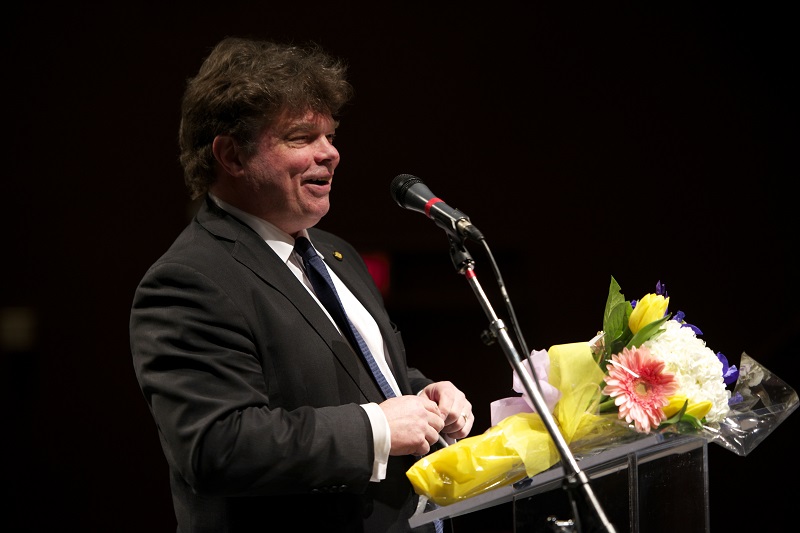
As the year comes to an end and another starts, we are going to say Happy Birthday to Dean Don McLean, whose birthday is on January 1!
Don McLean, Dean of the Faculty of Music since 2011, is Professor of Music Theory and Musicology. Awarded the Queen Elizabeth II Diamond Jubilee Medal through the Canada Council in 2012 for his “exploration of the changing context of music in the academy and society, and innovations in infrastructure development and interdisciplinary teaching and research.”
The Faculty of Music welcomed Dean McLean with a UTSO and MacMillan Singers concert on February 5, 2011. The program culminated in Beethoven’s Symphony no. 9.
Don Don McLean with Director of Advancement Bruce Blandford (centre) and Bruce’s partner Ron Atkinson, February 5, 2011.
Trained in piano performance and pedagogy, coaching and accompanying, conducting and composition, musicology and music theory, Don McLean is a three-time graduate of the University of Toronto and a two-time graduate of the Royal Conservatory of Music, and taught for both institutions from 1978–1989.
In 1988, he moved to Montreal and McGill University, where, as Dean of the Faculty from 2001–2010, he played key roles in strategic expansion of faculty and programs, the creation of CIRMMT (Centre for Interdisciplinary Research in Music Media and Technology), the realization of the New (now Elizabeth Wirth) Music Building (a world-class research, performance, and library facility), and, through a transformative gift from Seymour Schulich, the naming of the Faculty as The Schulich School of Music of McGill University.
During his time as Dean of the Faculty of Music, he has overseen the creation of the Music and Health Degree Program, the Music and Technology Degree program, the Digital Media at the Crossroads conference, and the Faculty’s first Strategic Academic Strategic Plan in decades.